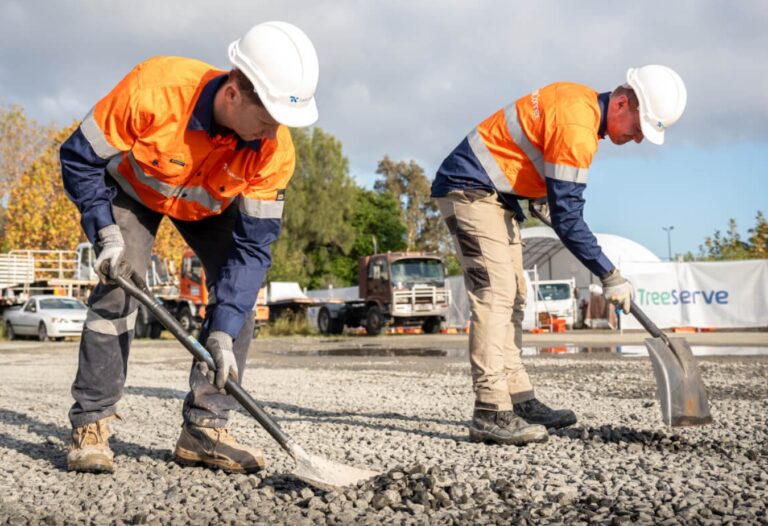
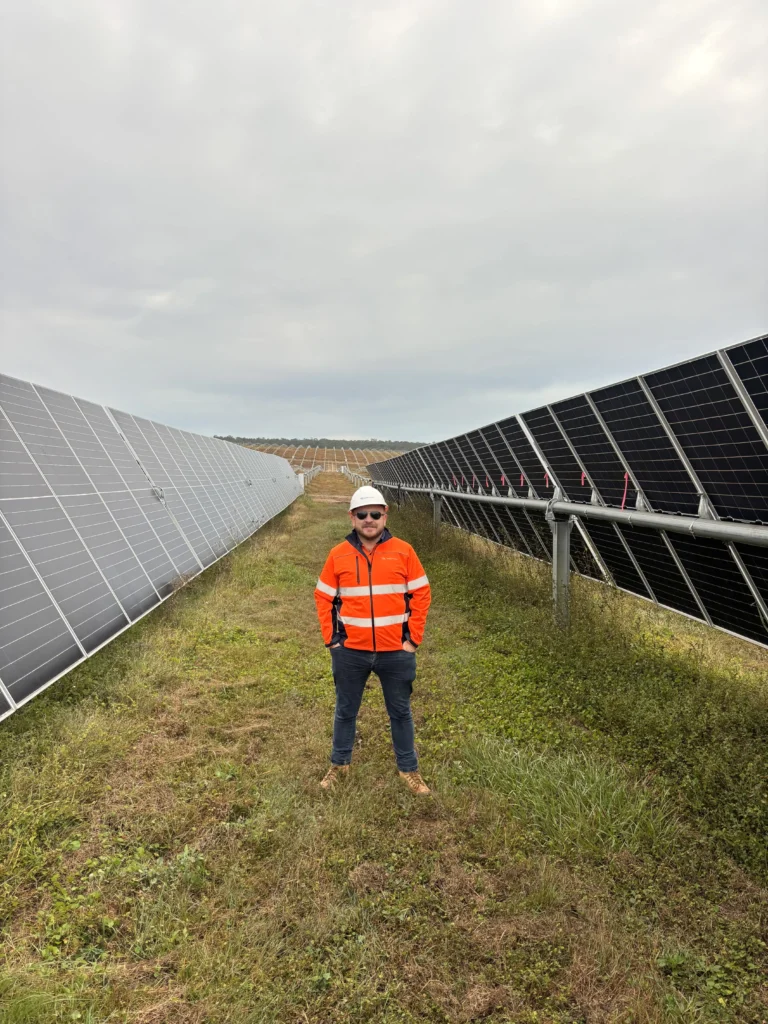
Solar farms, wind farms and battery storage projects keep coming online across the country, and the labour crunch that comes with them isn’t tied to any one build. It’s a sustained, national competition for the same trades and general labour, and employers who plan their workforce early are the ones who keep their programs on schedule.
Renewables demand isn’t slowing down
New solar, wind and battery energy storage projects are proceeding across New South Wales, Queensland, Victoria and beyond, often running at the same time as major roadworks, rail and other civil infrastructure builds. That matters because renewables projects aren’t drawing from a separate labour pool. They’re competing for the same civil crews, electrical trades and plant operators as the rest of the construction and infrastructure sector.
Infrastructure Australia projects a shortage of more than 300,000 construction and infrastructure workers by 2027. Renewables is one of the sectors pulling hardest on that same shrinking pool, alongside transport, energy and utilities projects that are all trying to mobilise crews at once.
Where the pressure shows up
The squeeze isn’t even across a project. A renewables build typically moves through civil works, mounting and installation, electrical and cabling, then commissioning, and each phase needs a different mix of workers. Civil labourers and plant operators are usually in heaviest demand early, while electrical trades and specialist commissioning staff become the bottleneck later on.
Run several sites at once, as many contractors now do, and the problem compounds. A crew that’s free this month might be tied up on another project by the time your next phase starts, especially for in-demand trades. Employers who leave workforce planning until a phase is already underway are the ones most likely to lose time waiting for the right people.
When local supply isn’t enough
Some roles are genuinely hard to fill from the local market alone, especially for specialist engineering and technical positions. Where that’s the case, sponsoring skilled workers from overseas is one way to keep a program staffed without carrying the sponsorship burden yourself.
TradeConnex holds an On-Hire Labour Agreement with the Department of Home Affairs and can sponsor eligible overseas workers on a Subclass 482 (Skills in Demand) visa for up to four years, covering roles such as civil, structural, electrical and mechanical engineers, construction and project managers, surveyors and estimators, among others. TradeConnex employs the sponsored worker directly and on-hires them to your business, so your company never has to become a sponsor itself. It’s one more lever for keeping a renewables program on track when the local market can’t cover every role. You can read more about how our On-Hire Labour Agreement works and whether it fits your project.
Building a workforce plan that keeps pace
The employers who handle this well tend to do three things. They map their crew needs against the project program, not just the current phase, so they can see a bottleneck coming before it hits. They build in flexibility, scaling a crew up for a busy stretch and back down once it passes, rather than carrying headcount they don’t need. And they start the conversation with a labour hire partner early, before a gap in the schedule forces a scramble.
A specialist renewable energy workforce partner who already understands how solar, wind and battery storage projects move through their phases can help you plan around that pipeline instead of reacting to it.
Get ahead of the labour crunch
If you’re staffing a renewables project and want to get ahead of the labour market rather than chase it, tell us what you need on site and we’ll help you build a crew that can scale with your program.
The information in this article is general in nature and describes TradeConnex’s On-Hire Labour Agreement service. It is not immigration, migration or legal advice. Visa requirements, occupation lists, income thresholds and processing times are set by the Australian Department of Home Affairs, change regularly, and depend on your circumstances. For advice about your situation, speak to the TradeConnex team or a registered migration agent, and confirm current requirements at homeaffairs.gov.au.