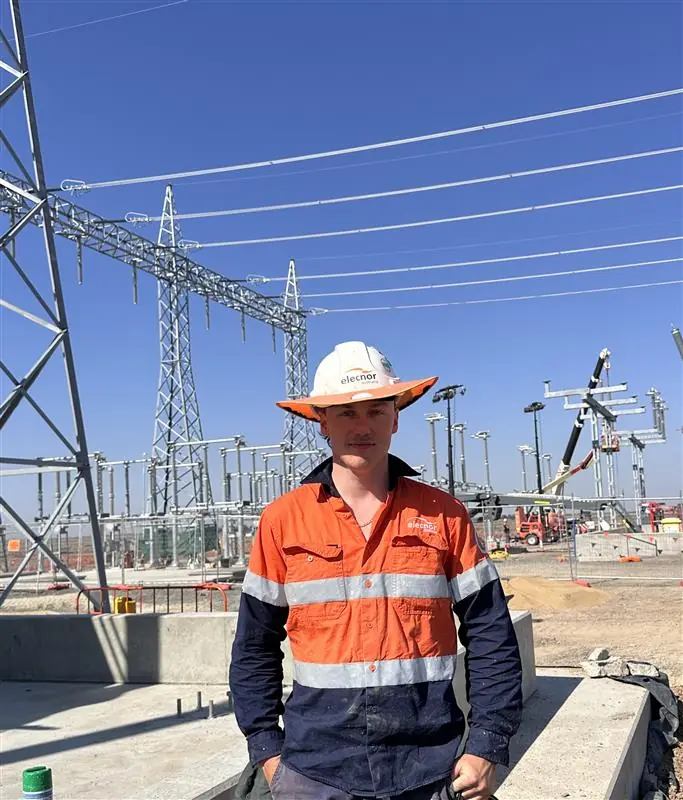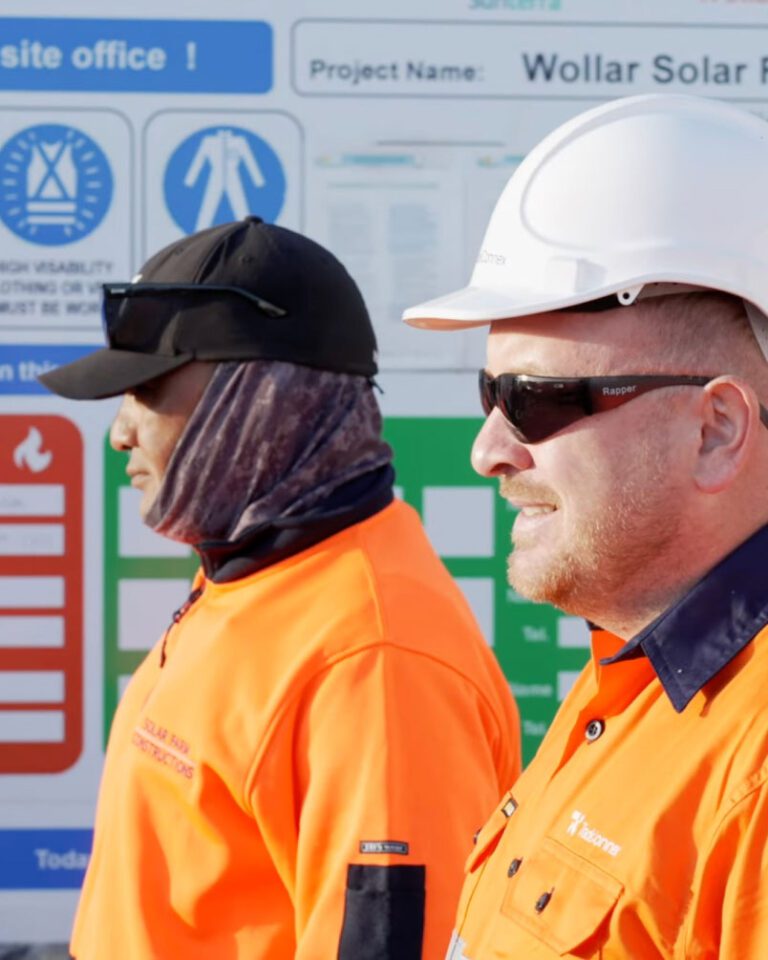
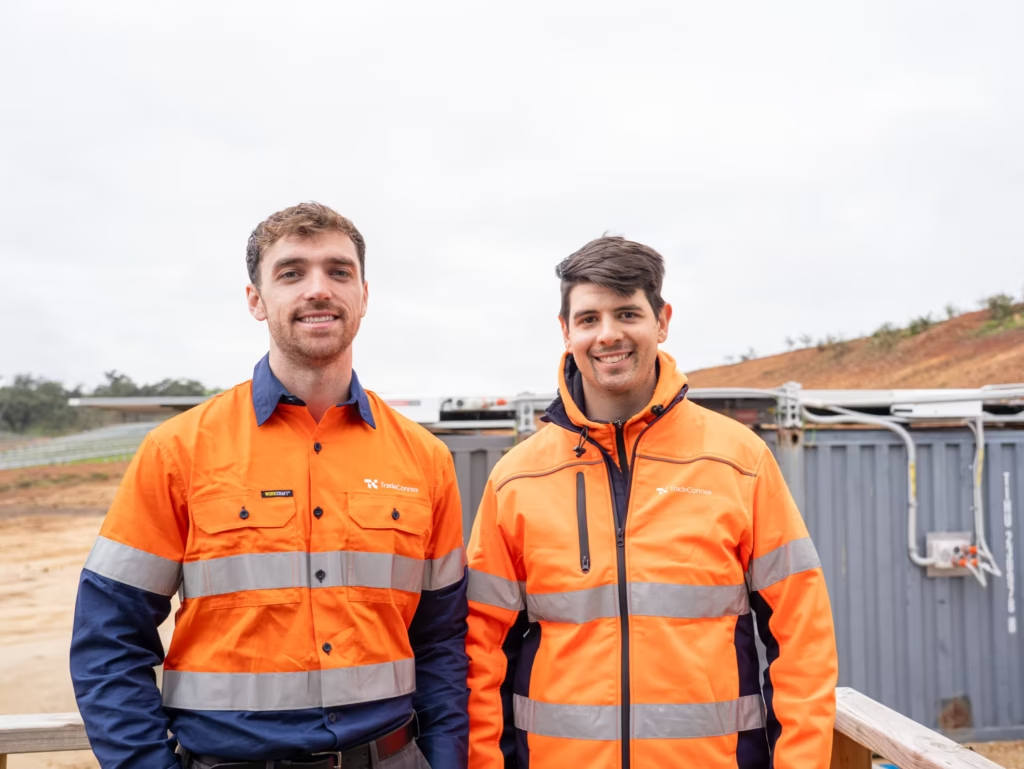
Working on a solar farm is construction work outdoors on a large regional site, usually alongside civil, electrical and mechanical trades, building a power station from bare paddock to switched-on plant. If you’ve worked on any other construction site, a lot of it will feel familiar. The differences are the setting, the mix of trades on site at once, and what you’re building towards.
The site and the setting
Solar farms are almost always built on regional land, well away from a CBD. The site itself is open and exposed: no half-built high-rise to shelter under, just paddock, access roads, rows of mounting structures and, eventually, panels as far as you can see. Because the build happens in stages, you’ll often see several trades working different parts of the same site in parallel: earthworks and access roads going in on one section while piling and panel installation are already underway on another, and electrical and cabling crews following behind.
Weather matters more here than on a lot of city sites. Heat, wind and rain all affect what work can safely go ahead on a given day, and sun protection is as much a part of your kit as your hard hat and boots.
A typical day
Days start early, usually with a toolbox talk or safety briefing before anyone picks up a tool. From there, the day is organised by trade and by stage of the build: civil crews doing earthworks and access roads, piling teams setting the mounting structures, electricians and cablers running and terminating cable, and mechanical fitters and installers fixing panels to the structures. Later in a project, testing and commissioning crews come in to get the plant switched on and generating.
It’s physical work, most of it outdoors, and you’ll be reporting to a site supervisor who coordinates your trade against everyone else’s. Sites are safety-focused by necessity: a lot of people, plant and vehicles moving around the same open area, so inductions and daily briefings aren’t a box-ticking exercise, they’re how everyone gets home at the end of the day.
The trades and roles on site
A solar farm build draws on a wide mix of roles: civil labourers, plant operators, piling crews, electricians and cablers, mechanical fitters and panel installers, scaffolders and traffic controllers, with quality assurance and commissioning specialists coming in as the project nears completion. Most of these workers aren’t employed directly by the head contractor. They’re placed through our labour hire service, engaged on a temporary or contract basis and put to work on the client’s site for the length of the build or a defined stage of it.
Tickets and licences you’ll need
Whatever your trade, you’ll need a general construction induction card, commonly known as a White Card, before you can start on any construction site, including a solar farm. It’s obtained by completing the nationally recognised general construction induction training.
Beyond that, some roles on site need a High Risk Work licence, issued by the relevant work health and safety regulator, for certain plant and machinery. Which roles need one depends on the specific job and equipment involved, so it’s worth checking what applies to your role and state before you start.
A good labour hire provider will check you’ve got the right tickets and licences for the role before you’re placed, so it’s worth having yours sorted, or knowing what you still need, before you start looking for work.
Getting placed on a solar farm project
Because most solar farm sites are regional, taking a role often means travelling to the site or relocating for the length of the project, something worth factoring in before you commit. On the upside, it also means access to work that isn’t tied to any one city.
TradeConnex places skilled and semi-skilled workers on solar and other renewable energy workforce projects around the country. If you’ve got the right tickets and you’re ready to travel for the work, register for work with TradeConnex and we’ll match you to a role that fits.
This article is general information only and current at the time of publication. Requirements can vary by state, role, industry and individual circumstances. Before acting, confirm the current details with the relevant authority, for example SafeWork (tickets and workplace safety), the ATO (tax and superannuation) or the Fair Work Ombudsman (pay and entitlements).